The Longest Presentation
The building said everything before we walked in

The building said everything before we walked in. A major American bank's London headquarters has a specific quality—the kind of space that communicates, without a word being spoken, that significant decisions are made here. The lobby, the security process, the elevator—the sheer size of it is calibrated to remind you that you are being received, not just visited.
We were there to present a portfolio of clean water infrastructure projects. The proposition on the table was whether the bank could package our work into an institutional investment product worth approximately 75 million dollars. The projects were real. The need was real. The opportunity, on paper, was real.
My boss had prepared extensively. I had come as Sales Manager—a title that implied I would have some role in a sales meeting.
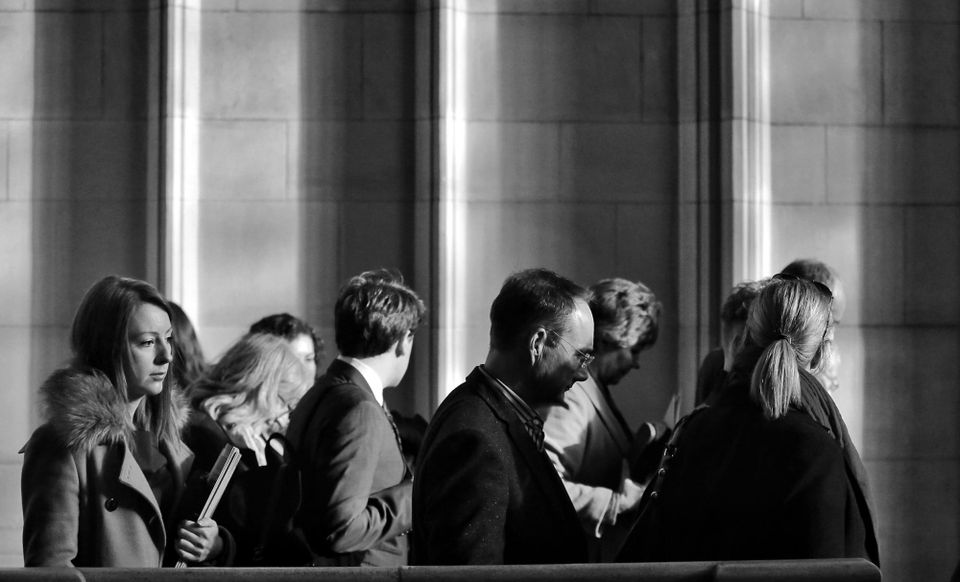
Also in the room: a team of Americans and Brits from the bank's London office. On the LED screen that dominated one wall: colleagues calling in from Singapore. And somewhere on that same screen, a senior finance professional from the bank's Paris operation, joining from La Défense.
The presentation began.
My boss knew the portfolio deeply—the technical specifications, the project histories, the community partnerships, the measurement frameworks, and upcoming regulations in the major markets. He had slides for all of it. Unfortunately, he was going to share all of it.
The room began to signal, early and then with increasing clarity, that it had questions. Bank team members attempted to ask them. I made several attempts to pick up the sales-related ones that were specifically addressed to me. Each time, my boss intervened immediately. He had all the answers, but did he really get the questions? The presentation continued.
At the forty-minute mark, a few people in the room shifted in their chairs.
At the sixty-minute mark, the Singapore team on the LED screen had gone noticeably quiet.
At the eighty-minute mark, one or two people had found reasons to leave. Others started to wonder: how much time was actually scheduled for this meeting?
The presentation ground on, the presenter undeterred by any signals from the room, concentrating on the task at hand.
At somewhere past the hundred-minute mark, the man from La Défense spoke. He had been patient thus far. And now, in the measured tone of someone who has decided that patience has reached its natural limit, he asked his first question.
What exactly is this product?
Then his second.
Is there actually a market for clean water infrastructure as an investable asset class—and if so, who are the buyers, and why do they buy?
Then his third.
Does it represent a tangible financial return for institutional investors?
The room went quiet in a specific way. Not the quiet of people thinking. The quiet of people who have just watched something arrive that they knew was coming.
These were not hostile questions. They were not even difficult questions—for someone who had been asked to present to this room. They were the three questions that should have been answered in the first ten minutes. The three questions that thirty seconds of genuine checking-in at the outset would have surfaced before the first slide appeared.
He was not the obstacle. He had been at the meeting the entire time. And nobody had thought to ask him what he needed.
What happened next is the part of the story that stays with me.
The Singapore team—his team, calling in from the other side of the world—began to answer their managers' questions. Trying to bridge the gap that a hundred minutes of presentation had failed to close. The initiative had shifted, completely and without announcement, to people who were not even in the room. Worse, it became unclear who hadn't done his homework: the manager, did he actually know this sector? The team in Singapore, had they been working too isolated on this asset class? Or was it the presentation itself, that failed to take them on the necessary tour?
People took the opportunity to help each other to another coffee or more water. And everybody wondered where we would go from here.
My boss, standing at the front with his slides behind him, understood that something had changed. He raised his voice and firmly attempted to re-enter the conversation. To reclaim the thread. To bring the meeting back to the material he had prepared.
It did not go smoothly.
The meeting ended shortly after—in the particular way that too many business meetings end. Not with a decision. Not with a clear next step. With warmth, with handshakes, and with promises to share additional materials by email soon.
Some meetings close doors so quietly that nobody hears them shut.
Why does this happen—not just in one meeting, but as a consistent pattern in cross-cultural, high-stakes settings? And what do such questions reveal about the assumptions we carry into every room we enter? The framework is in the next layer while the slides kept coming.